
Explains How FERC Wins Its Cases and How Practitioners Should Approach Prefiling Meetings; Plus, Much Human Interest Revealed Here for the First Time
By Gary E. Guy and David Martin Connelly
Access the PDF version of this article here.
Once again, dogged EBA undercover investigative journalists Gary E. Guy and David Martin Connelly (aka “Douglas Edwards and Edward P. Morgan”) have delved deep within the inner sanctum of the halls of government to speak with James Dawson, the General Counsel at the Federal Energy Regulatory Commission – the fifth FERC GC to be the subject of one of these articles (not to mention five other agency GCs).
Every top lawyer at FERC has been extraordinary. Mr. Dawson was a logical pick for Chairman Laura V. Swett, herself a seasoned practitioner who understands the exact talent required to lead the agency’s legal team. Dawson has generously shared great insights for us to convey to you, and it is our honor to do so here.
Trajectory: Texas, Top Schools, Top Law Firm, Top Lawyer at FERC

This impressively degreed, patrician-looking gentleman was born in Texas. He was given the middle name “Texas” by his mother after being handed down his “regal” first name from his father. His proud parents (who attended the July Commission Meeting to much surprise fanfare from Chairman Swett) grew up in separate small towns in East Texas, both attended Stephen F. Austin State University, and moved to Dallas after their marriage. James Texas Dawson had oil and gas energy instilled in him from his earliest roots. Here he is as a five-year-old, being held up by his Dad, a timber farmer, to touch the Trans-Alaska oil pipeline.
This photo is framed on a table in his office! Despite their understandable pride in his achievements, “if it was up to them,” he says, “I would still be living back in Texas.” We could not help but think of the serendipity of a FERC Chairman who aspired to that position as a law student teaming up with a FERC General Counsel who was literally reaching out to a pipeline from childhood. It is positively Shakespearean: What say the augerers; the stars are aligned!
An aside that all FERCers will enjoy: After a FERC Meeting, the Chairman and each Commissioner typically each go to lunch with their personal Staffs. After the July meeting, Mr. Dawson and his parents were luncheon guests of Chairman Swett.
Following his Lone Star State upbringing, our subject attended Ivy League schools in the northeast—first Columbia University, studying political science, and then Yale Law School. Then he moved to Chicago, where his wife (the better lawyer of the two, he states) is from. He later returned to the east and joined Vinson & Elkins, where he practiced law for five years alongside Chairman Swett and Max Etchemendy (a former Supreme Court clerk and “absolute superstar of a lawyer” who now serves as FERC’s Director of Legal Strategy). As far back as 2021, Dawson was selected for Rising Stars by Super Lawyers, and in 2022 he was recognized in Best Lawyers: Ones to Watch in America. In October of 2025, Chairman Swett appointed him General Counsel, one of only two political appointees at the agency, the other being the Chief of Staff. He and his wife have a son coming up on three years old and another child on the way. (Maybe he can duplicate that photo, only with him holding his son to a pipeline or gas-fired generator someday.)
How FERC Succeeds; How You Can Too!
Like his predecessors as General Counsel of what he calls the “greatest law firm in town” (currently hiring, along with other FERC offices), Mr. Dawson is FERC’s chief legal advisor on litigation, policy, compliance, and overall legal strategy. It is as to these matters, as well as the composition and workings of the agency under Chairman Swett, that we next dove into our probing questioning on your behalf, Dear Reader.
“Front-end care” accounts for FERC’s outstanding success rate on appeals.”
Dawson jumped at this “once in a lifetime opportunity.” He uses innumerable—and, as we all know, well-deserved—superlatives in praise of Chairman Swett. He sees her in the middle of a “Venn diagram” between “really talented lawyers” and leaders with “extraordinary political instincts and communications skills.” Dawson characterizes Chairman Swett as “exceptional, and a credit to all of us.”
Dawson noted that, in 2025, the Commission issued 977 voted orders, fully litigated (through merits briefing and oral argument) 29 appeals, and lost only 3 cases. He attributes FERC’s outstanding success rate on appeals to Chairman Swett’s leadership and the “exceptional” staff of the Commission.
Dawson quoted Chairman Swett’s public statement that, while she wants FERC orders to be legally durable, she will not hesitate to push the envelope where appropriate. While that may seem contradictory, he explains that the way to get it done is through “front-end care. When you write good orders, they defend themselves.” Dawson explained that there is a multi-level Staff upfront review of the proposal filed with the Commission and the relevant law, both the statutes and famous cases and the lesser-known ones that deal with newer issues not foreseen when the landmark cases came out. He credits this methodical research with how FERC can best those high-powered private bar leading lights who have come to assume that they have all this in their heads and forget the nuances that the FERC Staff picks up by diligently following these lower-profile cases.
He maintains that this kind of diligence by FERC Staff is essential now that FERC can no longer rely on Chevron deference. The agency “looks under every rock and issues deficiency letters when necessary. FERC wants to make sure that, when orders get to judicial review, they are fully baked, so that investment decisions can be made in reliance on them.” Three groups of lawyers—those who drafted the initial orders, a specialized group of rehearing lawyers (“law nerds”), and the Solicitor’s Office— team together to achieve these successful outcomes.
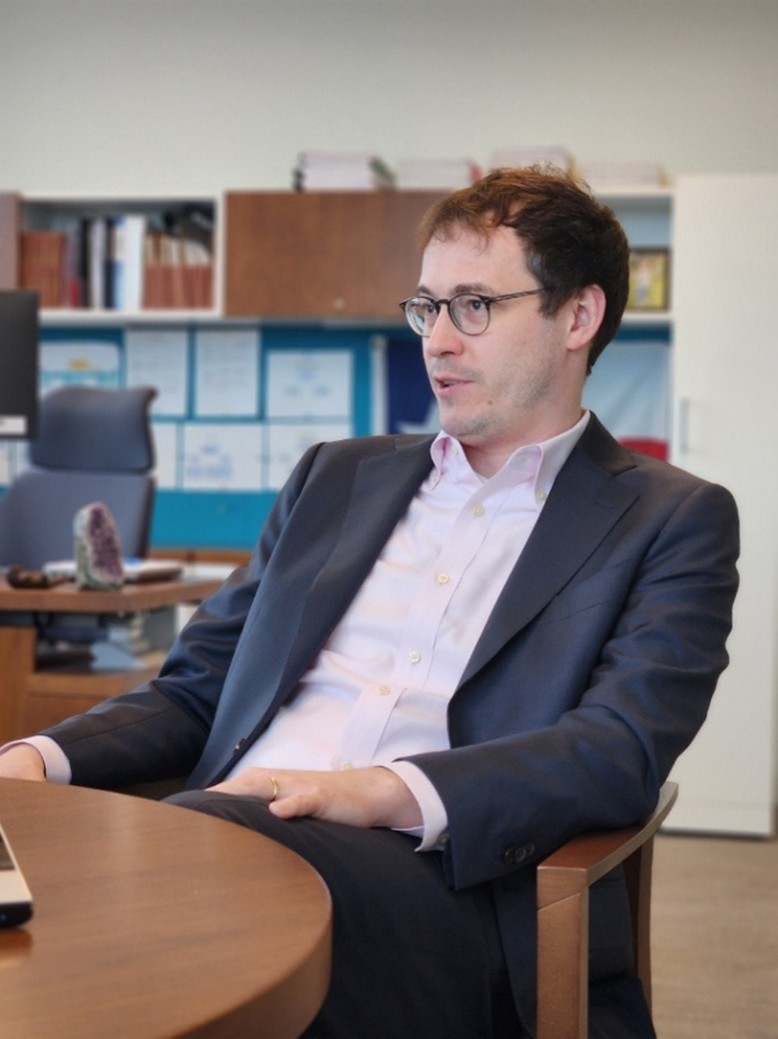
He observes as well that it is not always dispositive to win in one Circuit because a similar issue may arise in another Circuit that may have a different point of view with no obligation to follow any other Circuit decision.
He counts among the gems at FERC both his predecessor and current Deputy General Counsel David Morenoff (an “institution in himself, a mensch, a fine civil servant who is trusted by everyone”) and Robert Solomon (who in 20 years as Solicitor has argued in all but one Circuit Court), as well as the many other talented attorneys FERC has assembled. (EBA has featured both Morenoff and Solomon in prior interview articles posted on our website.)
How to Win a Case: Add Substance to the Fluff; Specify What You Want from FERC; and Intensely Engage Staff in Pre-Filing Dialogue
To prevail at FERC, we practitioners must know our audience. We often miss the mark. The GC cautions us lawyers against writing our pleadings exclusively to appeal to the perceived leanings of the Commissioners on big picture goals, without regard to the technical and legal rigor with which the matter will be reviewed by professional Staff before reaching the Eleventh Floor. While it is fine to tie a proposal to a broad policy objective, he admonishes that it takes more than that to prevail. He also cautions in-house practitioners not to write their pleadings to please their management, but instead to persuade highly skilled FERC Staff and ultimately a “very smart but very busy slate of FERC Commissioners.”
He also told us to keep the facts simple and be specific in our request for relief. As a judicial clerk, he would occasionally observe a Judge in oral argument ask counsel, “What do you want the opinion to say?” He is sometimes “frustrated” with long, well-written, thoughtful pleadings that do not reveal “what the filing party wants you to do,” particularly in a complaint or a petition for a declaratory order. “You would be surprised how many well-done pleadings miss that piece of the puzzle. And it can make a real difference.”
“You would be surprised how many well-done pleadings miss that piece of the puzzle” (revealing what you want FERC to do).
Uppermost in Mr. Dawson’s mind was to convey to the EBA membership the importance of prefiling meetings. Those meetings can serve to provide guidance not only on procedural matters, such as what statutory provisions to proceed under, but also whether what is sought to be achieved aligns with Commission priorities or can be reframed to do so. Under our withering examination, he went into a detailed step-by-step tutorial about how to go about these meetings. While it is good to have these meetings directly with the Chairman and Commissioners, he also strongly advises meeting with FERC’s Advisory Staff. This is because the Staff takes the first crack at delving into the necessary minutiae of examining stakeholders’ proposals to assess their legal sufficiency, including anticipating and addressing potential “NRG problems” and the applicability of the filed rate doctrine. Dawson explained that, in his experience, “successful filings tend to cover both” high-level and arcane legal points.
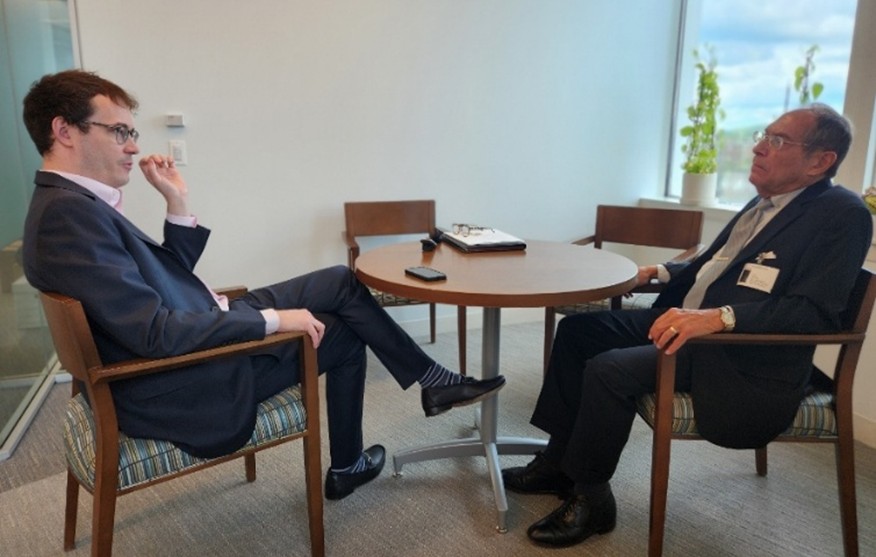
When you make the request for a pre-filing meeting, Dawson advises providing a one or two pager summarizing the main points, including five or so questions that you need help with. Then, he said every relevant department will study the matter before showing up for the meeting. That is why it is essential to give Staff adequate time to do this comprehensive advance preparation. Then, when you arrive, give Staff credit for being prepared by dispensing with a lengthy presentation as though they are no more than an audience. Instead, use the bulk of the time for interaction, so that the Staff can dive right in with its prepared feedback and candid perspective. His comments were right in line with the interview with the Chairman, when she told us that she wants government/industry collaboration with ground floor brainstorming to jointly figure out what is the best course, not a tail-end sales job that omits all the ideas that got left on the cutting room floor. Mr. Dawson said that he cannot understand why this procedure is not followed more widely before formal proceedings commence and the Commission’s ex parte rules take effect. Face-to-face “candid discussions with the decision-makers” who want to be reached out to for an active partnership are the way to go is his sage advice to us all.
“Candid discussions with decision-makers” before ex parte rules kick in are a must.
Touting Successes; Embracing Challenges
Dawson emphasized that the recent growth of data centers has transformed FERC from a sleepy federal agency to fodder for the front pages of national newspapers. He points out that a single data center can exceed the peak load of an entire state. He sees the framers of the Federal Power Act as never imagining loads of such size and demands for generation of such magnitude. “This is a new frontier, and it matters for controlling prices for consumers – the Chairman’s North Star. And if we get this wrong, China is going to eat our lunch” because these data centers are going to be built somewhere.
He observes that the Swett Chairmanship is still in its first year and that new initiatives are still getting underway with more to come (but alas he would not give us any scoop on that). “The idea is to bring in new blood” that may yield new priorities and associated reforms. He touts the rotations of new Chairmen and new Commissioners with new perspectives as a strength of the agency.
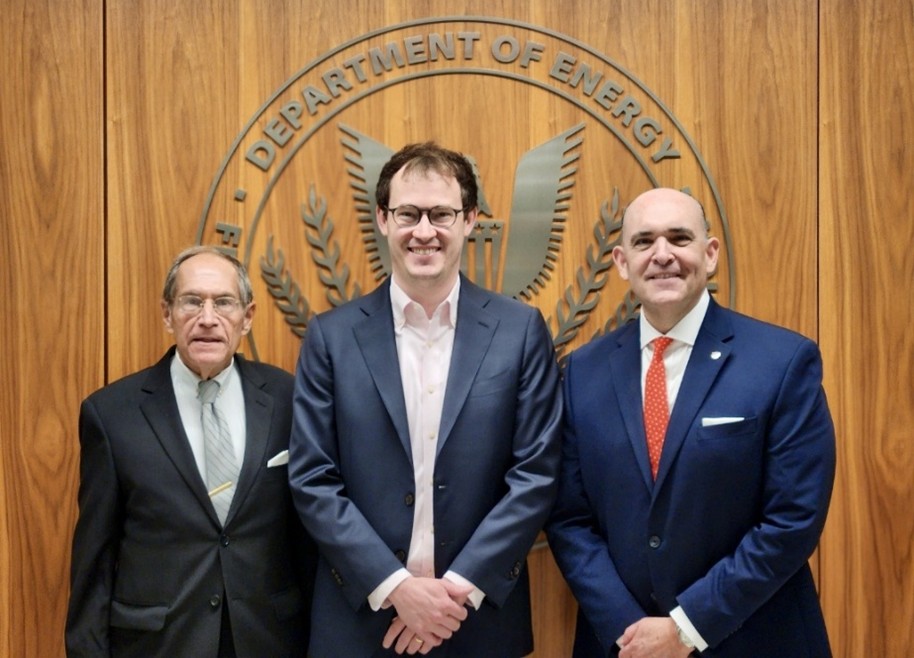
“Large loads and gas pipelines are front and center. But,” he adds, “there is something nice about new people coming in with new priorities and new interests.” They can go into dusty corners of the library and pull out old rulemakings from 20 to 30 years ago to see if they need sharpening up, or if maybe we need to go in a new direction. That makes it exciting.” Dawson also observed that he loves it when “strange bedfellows” make a joint filing. That type of consensus building among usually combative parties makes a good impression that compromise has been achieved.
For him personally, “there is never a dull moment.” He finds the “diversity of the work extraordinary. I get a thousand emails a day, and all of them seem to be marked urgent.” Recognizing that someone might well regard that as “insane,” he sees it as an “adventure.” Dawson also explained the tiered review process, where he is the last to see a draft order before it goes to the Chairman and Commissioners. He aims to read “every word of every order.” Someone recently told him that is equivalent to reading The Great Gatsby every day – and, he adds, “I think that is about right if you imagine that each order is on average 30 to 40 pages long.” On top of reviewing orders, Dawson must leave time for overall strategizing or participating in major events. Plus, he must devote himself to matters that result in a decision not to issue an order. “You could easily let this job eat 24 hours of your day.”
“You could easily let this job eat 24 hours of your day.”
Dawson noted that the Commission is currently hiring in multiple departments, and that he strongly encourages our young EBA members to “come to the Commission” as a place of employment. “This is a time when we are doing important work and there is a real opportunity for young folks to shoot directly up the chain of command…. And the experience can’t be beat.” In fact, as he sees it, “everyone at some point” who is engaged in energy regulation should work within the regulatory agency itself.
“It’s an interesting field,” he says of energy law. While it has enduring constitutional principles and federal statutes attached to it, it also has “so much going on and it is constantly changing.” To him, this differentiates energy law from other fields. “We are trying to adapt to changing circumstances. But energy is never going away and is the backbone that drives the economy.” It is comforting to know that such capable hands are at work at FERC to tackle these challenges and opportunities so ably. “Yes,” he concludes, “working in energy can’t be beat.”
Deeper Dive with Dawson
Morning person or night owl: Night owl. (“Just ask my wife!”).
If not in law, career would be in: Academia.
Go-to karaoke song: Friends in Low Places.
Hidden talents: Pretty good squash player; speaks French.
Beach vacation or mountain getaway: Mountain get-away.
Energy issue I am most optimistic about: Innovating to meet the challenges presented by large loads.
Comfort meal after a long day: Steak.
One word to describe the energy industry right now: Dynamic.
Guilty pleasure TV show or movie: 90 Day Fiancé.
First job: Working for Dad’s timber business.
Dogs or cats or both: Cats.
Skill you would love to acquire: Riding a bike.
Overlooked energy issue you want to address during your tenure: Oil pipeline ratemaking.
Best thing about working at FERC: The people.